
Pro Tips for Designing an Effective Trade Show Booth Layout
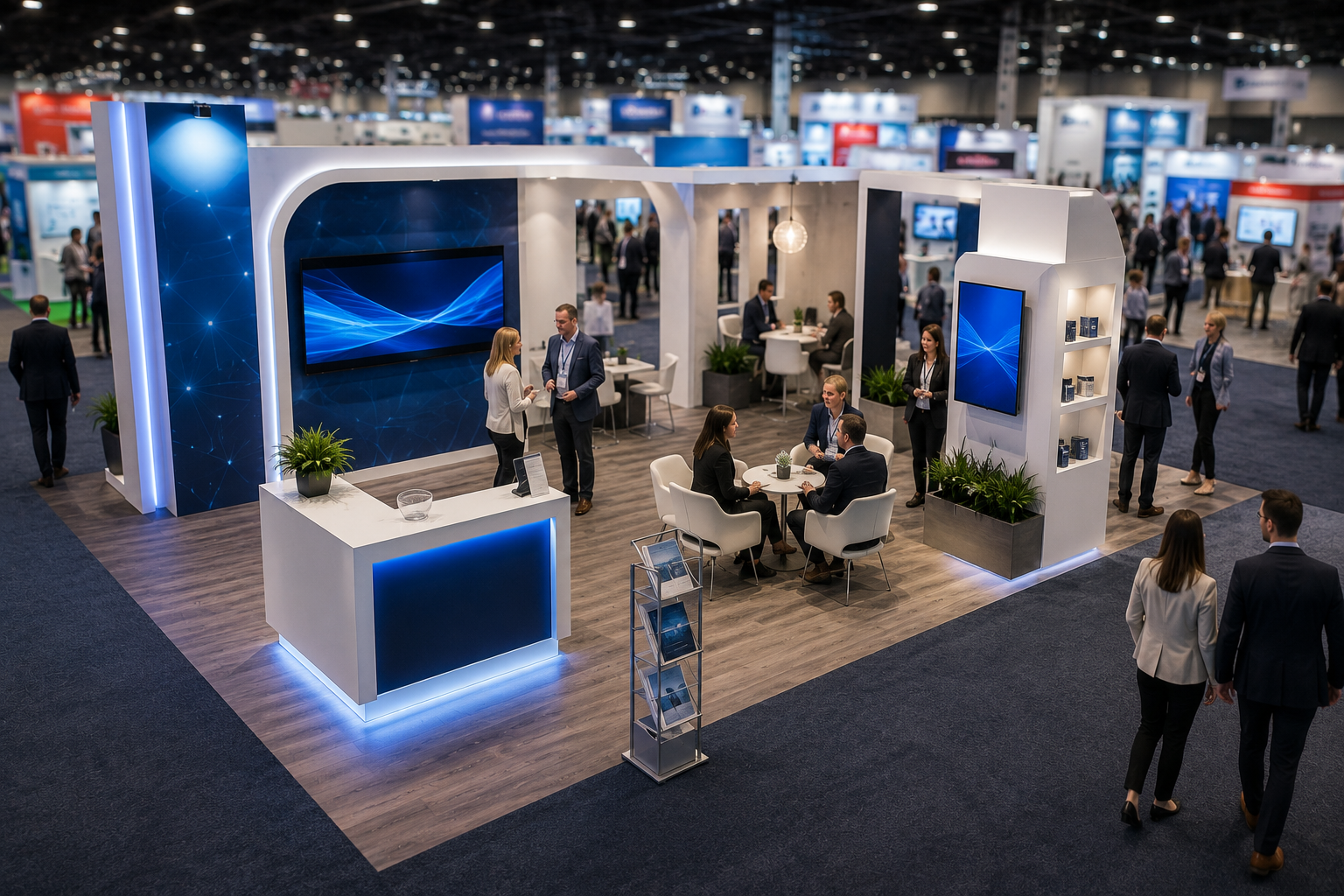
How to Design a Trade Show Booth Layout that Drives Traffic and Maximizes Flow
Key Takeaways
- A successful trade show booth layout creates clear paths for attendees to enter, explore, interact, and exit without congestion.
- Product displays, demonstrations, meeting areas, storage, signage, and booth staff should each have a deliberate place in the floor plan.
- Your booth’s location, neighboring exhibits, aisle traffic, and booth size should influence how you arrange the space.
- Open and closed layouts each have advantages; the right choice depends on your goals, audience, products, and available space.
An effective trade show booth layout can attract more traffic, create a natural flow through your exhibit, and make it easier for your staff to turn conversations into leads. A successful trade show booth floor plan considers much more than walls and graphics—it also accounts for entrances, product displays, demonstrations, meeting areas, storage, signage, and staff positioning.
Some factors of your trade show booth layout are up to you. For example, you get to choose where to place your walls, graphics, and product displays (as long as they abide by show regulations, of course). However, other factors like the layout of the convention center are out of your control.
When you understand why your floor plan matters and how to leverage your booth space’s surroundings, you’ll soon notice an increase in your lead generation and ROI.
Why Your Trade Show Booth Layout Matters
Here’s a cold, hard fact: if you don’t have the right trade show booth layout, you won’t attract people on the show floor.
If your booth is too cramped or cluttered, attendees strolling down the aisle may see it as disorganized or closed off. And if your booth space is too open, people either won’t understand where to enter, or they’ll think you don’t have any products or services they’re interested in.
So, how do you innovate a creative and engaging exhibit design with an inviting trade show booth layout that drives traffic? It starts with considering the elements involved in your layout. The physical hardware, signage, and the positioning of your booth staff are all key components. Additionally, you’ll need to take a close look at where you’re located in the convention center and how to make the most of your booth space.
How the Trade Show Floor Plan Affects Your Booth Traffic Flow
The trade show floor plan and the layout of the convention center itself greatly affect your booth traffic flow. In fact, picking the right space on the show floor is as important as determining whether to rent or buy your trade show exhibit.
Before you secure your booth space at each conference, take a look at the show’s overall floor plan. Find the main entrance and identify the natural traffic pattern through the show floor. Basically, try to anticipate the route that most attendees will take when they walk into the convention hall. Then, determine the best location for your company to showcase its offerings.
Once you’ve officially rented your booth space, you can start figuring out the trade show booth layout that will bring you the most traffic. Start with these questions to encourage the brainstorming process:
- Where is your booth space in relation to high-traffic areas like restrooms and concession areas?
- How close is your space to your biggest competitors, and how can you design your booth layout to attract attendees leaving their exhibits?
- Are there any large island exhibits in your vicinity that will draw a lot of people that you can guide into your space with the right layout?
- Where should you strategically place your booth staff to capture and engage as many attendees as possible?
In other words, use the convention center floor plan and your neighboring exhibitors to your advantage. Base your trade show booth layout on where the majority of attendees will be walking. With the right positioning of your exhibit entrances, walls, staff, and product displays, you’ll enhance the quantity, quality, and flow of your booth traffic.
Trade Show Booth Layout Best Practices
Identifying the right trade show booth layout is one of the first steps in the overall process of getting a custom exhibit. Just like the entire booth design, your layout needs to align with your company’s branding and vibe. It also needs to drive traffic and include the display components your on-site team needs to succeed, like product displays, demo stations, meeting areas, and storage rooms.
To help you arrive at the most effective layout, here are a few booth design best practices you might want to consider.
Choosing an Open vs. Closed Booth Layout
Does your company’s culture and products lend themselves to an open and airy trade show booth layout? Or are you more protective of the intellectual property you bring to each convention? There are pros and cons to both of these booth layout ideas.
Some exhibitors opt for an open layout. Clear entry points, often indicated by interactive kiosks or welcoming reception counters, and wide-open sightlines throughout the booth space can be inviting. Attendees can step into your display area without being overwhelmed by clutter—but an ineffective layout will leave them a bit lost if they’re not sure where to go or how to guide themselves through the space.
Other companies choose a more closed-off layout. Walls of hardware and graphics that prevent attendees (and your competitors, for that matter) from peering into your exhibit from the aisle create a sense of mystery. You might even end up with a line of people eager to see what you’re hiding inside. However, closed layouts can be a bit cramped and might limit the number of attendees you can have in the space at one time.
Remember: there’s no universally correct answer as to whether an open or closed trade show booth layout is the right way to go. Carefully consider your company’s messaging and your audience’s preferences in picking which method is best for your business.
Where to Place Product Displays and Demonstrations
Regardless of whether you go for an open or closed trade show booth layout, you’ll need to incorporate design ideas that drive engagement into your display.
Depending on the industry and event, these might be purely informative, just for fun, or a combination of both. Popular ideas include:
- Interactive touchscreen kiosks
- Live product demonstrations
- High-tech stations that use virtual or augmented reality
- Stationary product displays where booth visitors can see, touch, and even try out your wares
- Games or contests with prizes
The size and number of these display components will, of course, affect your exhibit layout. You’ll need to strategically place them where as many attendees as possible will see them, so you draw as much traffic as possible.
The Best Spots for Meeting Areas and Storage Rooms
A lot of exhibitors are so focused on branding and product advertising that they sometimes overlook some of the most important components in every trade show booth layout. However, meeting areas and storage rooms should absolutely be included in your trade show exhibitor checklist.
The size of your exhibit space will largely drive how much square footage you can dedicate to these elements. Big displays (usually islands or peninsulas) might have a private conference room with a large table that seats eight or more people, plus a locking storage closet where you can stash plenty of extra giveaways and collateral, plus your booth staff’s coats and laptop bags.
Smaller exhibits, on the other hand, need to be more selective. For example, 10×10 or 10×20 inline displays might only have room for a two- or three-person table for meetings and a locking reception counter for storage.
Whatever size space you’ve rented on the show floor, your trade show booth layout needs to shine. And when you partner with the experts, your display will include the booth design best practices that attract the right people and lead to more sales.
Let Our Experts Design the Trade Show Booth Layout that Drives More Traffic at Your Next Expo!
Your company deserves the highest marketing ROI possible—and that starts with an effective trade show booth layout. No one knows the expo industry better than we do. Our talented designers will leverage their knowledge of the convention center and your audience to craft a layout that gains attention and leads on the show floor.
Tell us about your project today, and let’s get started on your custom trade show booth layout!
Trade Show Booth Layout FAQs
What is the best layout for a trade show booth?
The best layout depends on booth size, location, audience, and exhibiting goals. In general, successful layouts provide clear entrances, open sightlines, intuitive traffic flow, visible branding, and dedicated areas for important activities such as demonstrations or meetings.
How do you create traffic flow in a trade show booth?
Create obvious entry points, avoid placing large objects in major walking paths, and position displays so visitors naturally move from one area to another. Staff should be positioned where they can greet attendees without blocking the entrance.
What should be included in a trade show booth layout?
Most booth layouts should account for branding, product displays, demonstrations, meeting areas, storage, reception, technology, signage, staff positioning, and clear paths for attendees.
How much space do you need for a trade show booth?
It depends on what you need to accomplish. A 10×10 booth can work well for branding and simple product displays, while larger 10×20 or 20×20 booths provide more room for demonstrations, meetings, storage, and multiple engagement areas.